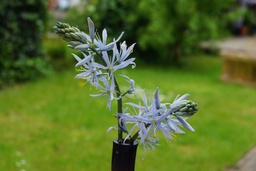
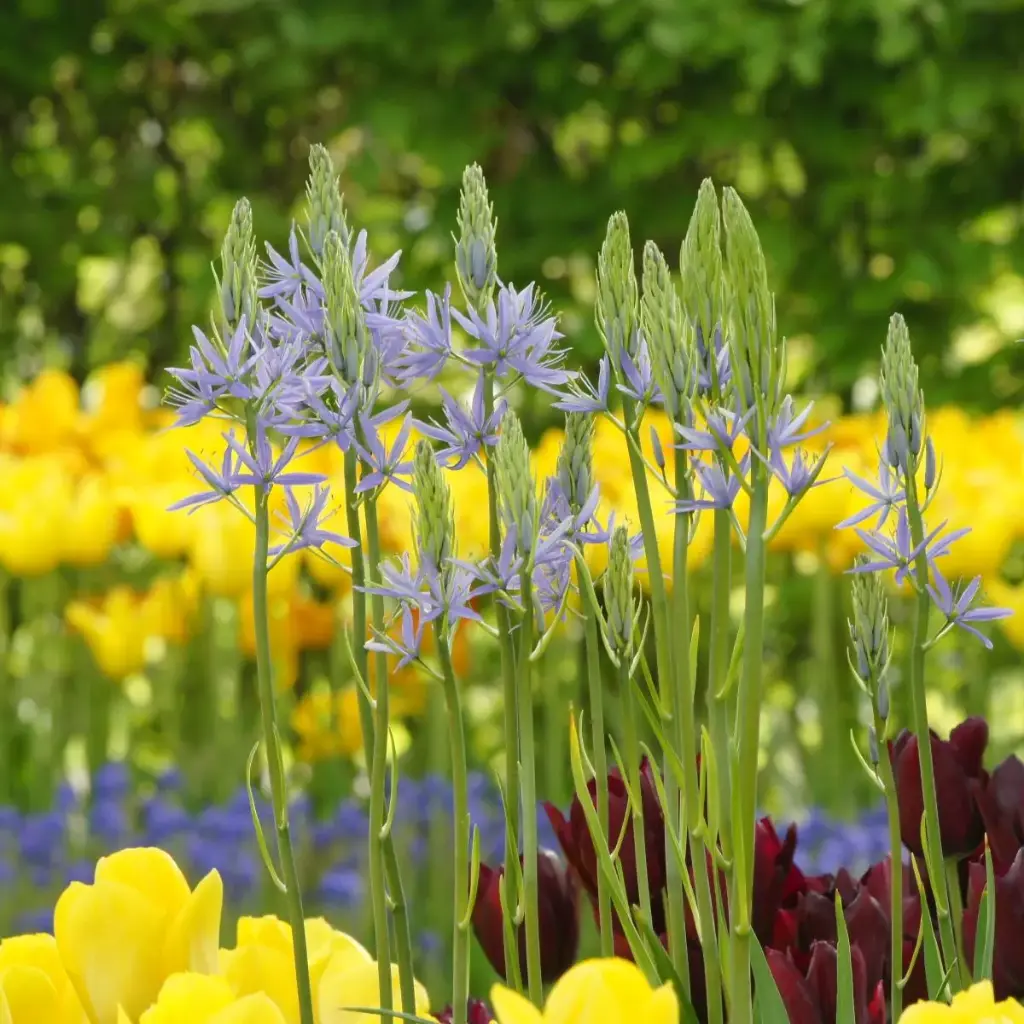
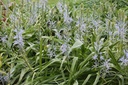
Anyone who hasn’t yet discovered our organic Camassia cusickii is missing out. It’s not a show-off; no bright colours, no large flowers, no overpowering scent. But when it rises above the border on its long stems in May and June, with those long clusters full of pale blue stars, it is unmistakably beautiful. Understated, yet striking. And once established, it returns every year.
The Indian hyacinth of North America
Camassia has a remarkable history. The plant originates from the plains and hills of western North America, where its tubers served as food for the indigenous people for centuries, hence its nickname ‘Indian hyacinth’. The tubers were roasted or steamed and are said to have tasted sweet and malty. These days, you plant them in the border, but that history gives the Camassia something extra: a plant with roots in another world, which is now a natural part of the garden.
Blooms at just the right time
Camassia cusickii flowers in May and June, just when the major spring-flowering plants such as tulips and daffodils have already finished flowering, but the summer plants have not yet got going. It fills that gap with elegance and also provides a valuable food source during that period for bees and butterflies, which are still active in late spring but find fewer options available.
Suitable for damp spots
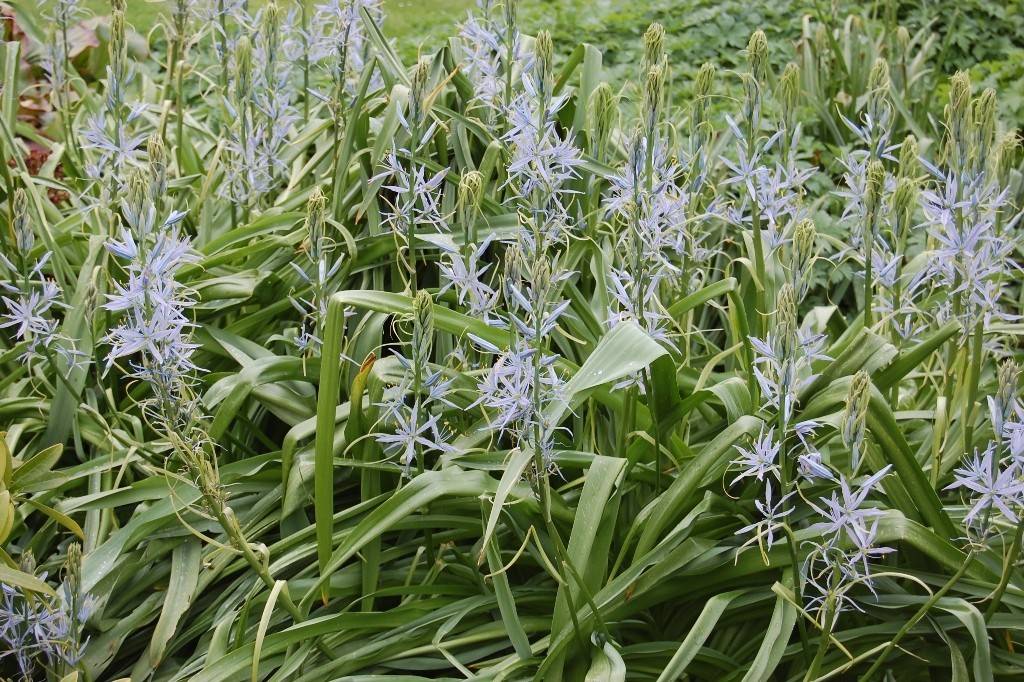
Unlike most bulbous plants, Camassia prefers a spot with slightly more moisture. It thrives in damp borders, along water’s edges, on wet verges or in light clay soil. Combined with late-flowering perennials or ornamental grasses, it creates a beautiful, naturalistic display. Plant the corms in autumn at a depth of around 10 cm, in a sunny to lightly shaded spot. They are hardy and gradually naturalise. Once planted, they require very little further attention.

![[AM99025] Bee Buffet Pond Companions - ORG](/web/image/product.template/7153/image_512/%5BAM99025%5D%20Bee%20Buffet%20Pond%20Companions%20-%20ORG?unique=56f476f)
![[A9016] Camassia Leichtlinii Caerulea - ORG](/web/image/product.template/10012/image_512/%5BA9016%5D%20Camassia%20Leichtlinii%20Caerulea%20-%20ORG?unique=c2621d8)