Tile Remover Garden Bed Kit Sun 4 m² - ORG
Reference: X7901
Finally turn that sunny patch into the border you’ve always imagined
- Blooms all summer long
- Colourful and fragrant
- A delight for the bees
- Years of enjoyment
- 100% organic
The perennial season is over. Starting in January, perennials will be available for pre-order again.

Natural Bulbs
-

100% Organic NL-BIO-01
Detail
Four metres of full sun is no problem — it’s an opportunity. But anyone setting out to find the right perennials for a sunny border will soon find themselves down a rabbit hole of varieties, combinations, flowering times and differences in height. Which plants tolerate drought? What’s still flowering once the peak of summer has passed? Which ones attract bees and which continue to flower well into autumn?
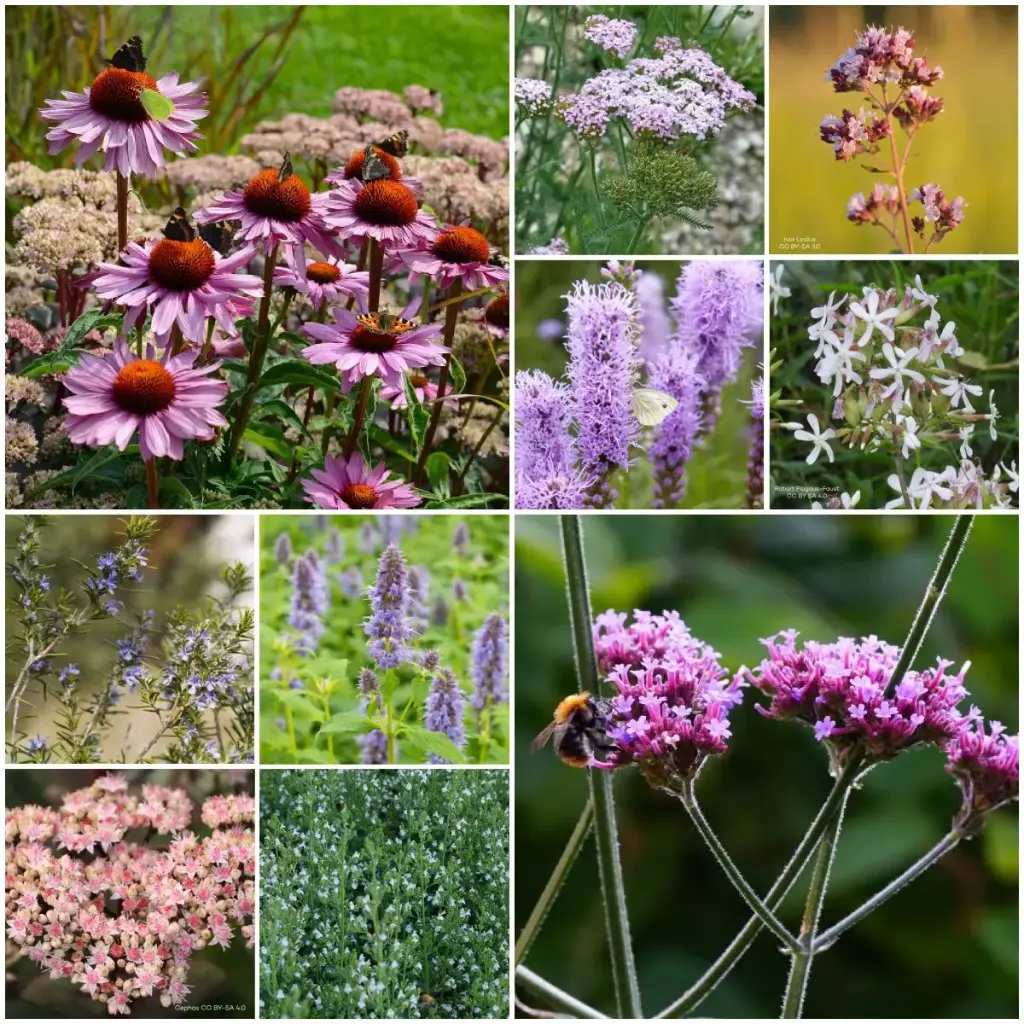
We’ve done the hard work for you. This pack has been put together by people who know their plants, and contains 36 organic perennials across ten varieties that complement each other in terms of flowering time, height, scent and colour. All you have to do is plant them.
Ten plants, one complete picture
Small in size, big in impact. Lesser Calamint attracts more bees per square metre than almost any other garden plant you could choose. The small white to pale purple flowers appear in June and last until October, long after other plants have finished flowering. The leaves have a fresh, herbaceous scent, slightly reminiscent of mint, and were traditionally used as a remedy for digestive complaints. In the border, it ensures a constant stream of insects and a subtle, pleasant fragrance.

Stonecrop is the stoic of the perennial world. Thick, succulent leaves store water, ensuring it survives — and flowers — even during the longest dry spells. The flat flower heads appear late in the season, just when the supply for bees and bumblebees begins to dwindle. Stonecrop is then one of the few plants still offering plenty of nectar. Moreover, it remains decorative even in winter, with its dry flower heads that withstand frosty nights without complaint.

Slender, tall and full of small purple flowers on long stems — Vervain is the plant that adds depth to a border. It flowers continuously from June until the first frost and attracts butterflies like no other perennial in this selection. Small tortoiseshell, painted lady, peacock butterfly: they all favour the flowers of Vervain. And despite its height of up to one and a half metres, its form is so airy that it never becomes too dominant.

The anise hyssop owes its name to its scent: refreshing, slightly aniseed-like, with a hint of liquorice. The leaves smell lovely as you walk past; the blue to purple flower spikes are a feast for bumblebees and bees. Agastache flowers for a long time, thrives in the sun and is exceptionally drought-tolerant once established. In a sunny border, it is both ornamental and useful, and it combines beautifully with the warmer colours of purple coneflower and yarrow.

Few plants are as instantly recognisable as the purple coneflower — and few plants deserve that fame quite as much. The pinkish-purple flowers, with their cone-shaped centres, are an icon of the summer garden. Echinacea flowers from July to September, but the story doesn’t end with the blooms: the dry seed heads that remain are also attractive to winter birds. In folk medicine, Echinacea purpurea has been known for centuries as a herbal remedy for colds. In the border, it symbolises beauty, resilience and ecological value.

The dense blazing star blooms from top to bottom, like an upside-down candle burning slowly. The purple-pink flower spikes appear in summer and are irresistible to bees and bumblebees. Liatris is also particularly graceful: the slender, upright stems give a border structure and height without toppling over. After flowering, the dried flower spikes remain attractive, both in the garden and in a vase.

Centuries ago, people used the leaves of soapwort to wash clothes. The plant contains saponins — a type of plant-based soap that lathers when it comes into contact with water. Nowadays, it is grown in borders for its graceful pink flowers, which appear in summer and persist well into autumn. Soapwort is imperturbably hardy, spreads gently and, in the evening, attracts moths with its soft scent — moths that tend to ignore most other plants.

Named after Achilles, the Greek hero who, according to legend, used it to treat wounds. Whether the story is true, nobody knows, but it immediately highlights just how old and valuable this plant is. Its finely pinnate leaves have been known in folk medicine for centuries, and in the border it shines with broad, flat flower heads that last for months and attract an impressive procession of insects. One of the most valuable plants for biodiversity that you can grow in your garden.

On pizza, in tomato sauce, with grilled meat — marjoram is the herb that tastes of a Mediterranean summer. But in the border, it does much more than just smell lovely. The small pink flowers that appear in summer have for years been among the plants that receive the most bee visits per day. You can enjoy a treat from your own garden and help nature at the same time: two birds with one stone.

You can smell rosemary before you see it. That resinous, warm Mediterranean scent is unmistakable, and it is precisely that scent that has linked rosemary to kitchens, rituals and memories for centuries. In the border, it is one of the earliest bloomers: as early as early spring, the small blue flowers are in bloom, just when bumblebees first start looking for nectar and few other plants are flowering.

Plant once, enjoy year after year
All ten varieties in this pack are perennial plants: plant them once, and they’ll come back on their own every spring. No replanting, no extra budget. The border grows a little denser and more lush each year, with early and late bloomers, tall and short plants, and scents for both day and night — from June well into autumn.
A feast for bees, butterflies and moths
Lesser calamint, marjoram and rosemary are among the best bee-friendly plants you can choose. Vervain and echinacea attract butterflies, whilst soapwort and anise hyssop cater for the evening shift. Together, these ten varieties provide food for pollinators from April to October — and that is precisely what distinguishes a living garden from a planted border.
Planting advice for the best sunny border
Sun-loving plants thrive best in light, well-drained soil — you can lighten heavy soil by mixing in sand and mature compost. Space plants 25 to 30 centimetres apart, placing taller varieties (verbena, echinacea, liatris) at the back and shorter plants in the foreground. They will need a little extra water in the first few weeks; after that, most varieties are highly drought-tolerant.
Organically grown, naturally robust
No artificial fertilisers, no pesticides. All 36 plants are certified organically grown and are supplied in a half-litre P9 pot — compactly packed, but with a root system ready for the open ground. Organic plants are naturally more robust: they have grown up in an environment that has challenged them, not spared them.
Main characteristics
Height | Colour | Flowering time | |
Calamintha Nepeta | 30-45 cm | White | June - September |
Sedum 'Matrona' | 30-60 cm | Pink | August - October |
Verbena Bonariensis | 100-150 cm | Purple | June - October |
Agastache 'Blue Fortune' | 60-90 cm | Blue | July - September |
Echinacea Purpurea 'Magnus' | 60-90 cm | Pink, purple | July - September |
Liatris Spicata | 60-90 cm | Pink, purple | July - August |
Saponaria Officinalis | 50-70 cm | Light pink | July - September |
Achillea Millefolium 'Apfelblüte' | 50-80 cm | Light pink | June - September |
Origanum Vulgare 'Compactum' | 15-30 cm | Pink, purple | June - September |
Rosmarinus Officinalis | 50-100 cm | Light blue | March - May |
Alternative Products
![[X7900] Tile Remover Garden Bed Kit Sun 1 m² - ORG](/web/image/product.template/15424/image_512/%5BX7900%5D%20Tile%20Remover%20Garden%20Bed%20Kit%20Sun%201%20m%C2%B2%20-%20ORG?unique=eb4488a)
![[X7902] Tile Remover Garden Bed Kit partial shade 1 m² - ORG](/web/image/product.template/15427/image_512/%5BX7902%5D%20Tile%20Remover%20Garden%20Bed%20Kit%20partial%20shade%201%20m%C2%B2%20-%20ORG?unique=eb4488a)
![[X7903] Tile Remover Garden Bed Kit partial shade 4 m² - ORG](/web/image/product.template/15428/image_512/%5BX7903%5D%20Tile%20Remover%20Garden%20Bed%20Kit%20partial%20shade%204%20m%C2%B2%20-%20ORG?unique=eb4488a)
![[X7904] Tile Remover Garden Bed Kit shadow 1 m² - ORG](/web/image/product.template/15429/image_512/%5BX7904%5D%20Tile%20Remover%20Garden%20Bed%20Kit%20shadow%201%20m%C2%B2%20-%20ORG?unique=eb4488a)
![[X7905] Tile Remover Garden Bed Kit shadow 4 m² - ORG](/web/image/product.template/15430/image_512/%5BX7905%5D%20Tile%20Remover%20Garden%20Bed%20Kit%20shadow%204%20m%C2%B2%20-%20ORG?unique=eb4488a)
Product Features
| Uncategorized |
|---|